
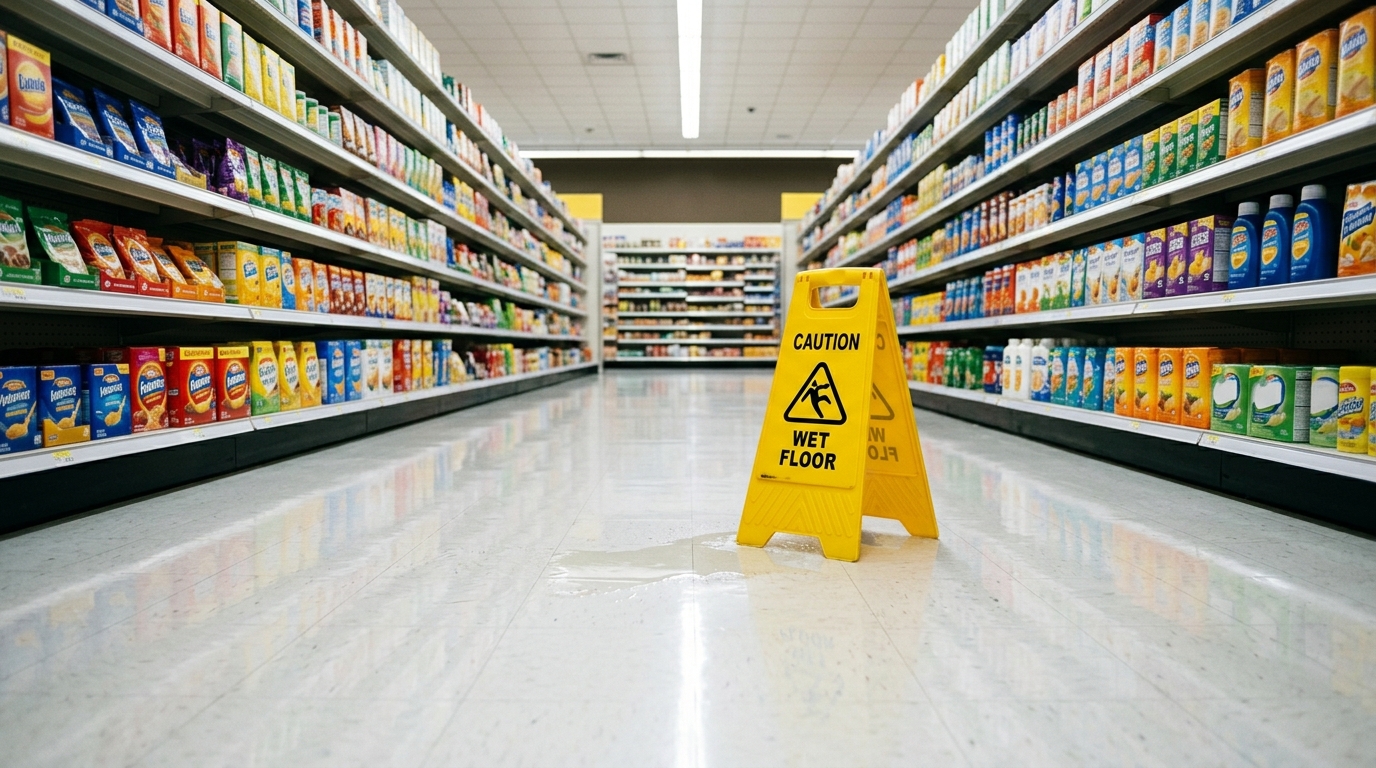
Slip-and-Fall Claims Against Stores and Businesses in Los Angeles
If you were injured at a store, restaurant, office, parking area, or other business in Los Angeles, the evidence gathered in the first hours and days can matter significantly. Premises liability is the area of law that may apply when an unsafe condition on someone else’s property causes an injury, but responsibility is never automatic. As a Los Angeles personal injury attorney, I evaluate the specific facts: what created the hazard, how long it existed, who knew or should have known about it, and what documentation supports the claim.
Understanding Premises Liability in Plain Language
Businesses that invite customers, visitors, vendors, and other lawful guests onto their property generally have a duty to use reasonable care to keep the premises reasonably safe. That does not mean every accident creates legal liability. A spill, uneven surface, broken handrail, poor lighting condition, or parking-lot hazard must be evaluated in context.
For example, a business may be responsible if it created a dangerous condition, knew about it and failed to address it, or should reasonably have discovered it through regular inspections. On the other hand, a recently created hazard may raise different questions. A premises liability attorney examines maintenance practices, inspection records, employee knowledge, video evidence, and other details before drawing conclusions about fault.
Dangerous Conditions That Can Cause Business Injuries
Injuries can occur in nearly any commercial setting. A business injury attorney may investigate conditions inside a building as well as hazards outside its entrance, on sidewalks, in loading areas, or throughout a parking structure.
- Wet or slippery floors caused by spills, leaks, mopping, or tracked-in water
- Uneven flooring, loose rugs, torn carpeting, cracked tiles, or damaged stairs
- Missing or inadequate warning signs around known hazards
- Broken, loose, or improperly maintained handrails
- Poor lighting in hallways, stairwells, parking lots, or garages
- Falling merchandise, unstable displays, and unsafe shelving
- Cracked pavement, potholes, wheel stops, or uneven walking surfaces
- Obstructed walkways, cords, boxes, or debris left in pedestrian areas
The location matters. An injury in a private parking lot may involve different parties and records than an incident on a public sidewalk. In situations involving government-owned or maintained property, a sidewalk and municipal liability lawyer may need to assess special notice requirements and deadlines that can differ from an ordinary business claim.
Report the Incident Before You Leave, If Possible
After an injury, notify a manager, supervisor, security officer, or other responsible employee as soon as you can. Ask that an incident report be prepared, and request a copy if one is available. If the business will not provide a copy, write down the name and title of the person who received your report, along with the time, date, and what you told them.
An incident report is not a final determination of fault. Still, it can establish that the business received notice of the event and may preserve important initial details. Be accurate and concise when describing what happened. Avoid guessing about facts you do not know or accepting blame before the evidence has been reviewed.
Photograph the Scene and Preserve Physical Evidence
Photographs and video can be especially valuable because dangerous conditions may be cleaned up, repaired, moved, or otherwise altered quickly. If you are physically able, take clear photos and video of the hazard, the surrounding area, warning signs or the absence of signs, lighting conditions, and any visible injuries. Capture wide shots that show the location and closer images that show the specific condition.
Preserve the footwear and clothing you wore at the time of the incident. Do not wash, discard, or alter them. Put the shoes aside in a safe place and take photographs of their condition. Footwear can become relevant when an insurer or business questions traction, wear, or whether the shoes contributed to the fall.
Request Preservation of Surveillance Footage
Many stores, restaurants, offices, and parking facilities use security cameras. Surveillance footage may show the incident, the condition of the area beforehand, employee activity, inspection practices, or the timing of a cleanup. However, video systems often overwrite recordings after a short period.
As soon as possible, make a written request that the business preserve footage from the relevant area and timeframe. An attorney can also send a preservation letter seeking video and other evidence. At the Law Offices of Ricardo A. Lopez, I review whether prompt steps should be taken to preserve evidence that may otherwise disappear.
Get Witness Names and Contact Information
Witnesses may have seen the fall or other incident, noticed the dangerous condition earlier, observed employees responding to it, or heard statements made afterward. If anyone assisted you or stopped to ask what happened, obtain their name, phone number, email address, and a brief note about what they observed.
Do not rely only on the business to identify witnesses. Employee recollections and written reports may be important, but independent witnesses can provide a separate perspective. A slip and fall lawyer in Los Angeles can evaluate how witness accounts fit with photographs, video, medical records, and the physical layout of the property.
Seek Medical Care and Keep Detailed Records
Prompt medical attention protects your health and creates documentation of the injuries connected to the incident. Follow medical advice, attend recommended appointments, and explain all symptoms to your providers. Some injuries, including concussions, soft-tissue injuries, fractures, and back or neck conditions, may not be fully apparent at the scene.
Keep copies of medical records, bills, prescriptions, discharge instructions, work restrictions, receipts, and correspondence from insurers. A simple journal can also help document symptoms, limitations, missed work, and how the injury affects daily activities. The Law Offices of Ricardo A. Lopez uses these records to understand the practical consequences of an injury, not merely the initial diagnosis.
Why Notice of the Hazard Matters
One central issue in many premises liability matters is notice. Did the business know about the hazardous condition? If not, would a reasonable inspection process have revealed it before the injury occurred? Evidence such as surveillance footage, employee statements, cleaning logs, inspection records, prior complaints, and witness observations may help answer those questions.
Notice can be actual, such as when an employee saw a spill or received a complaint. It can also be constructive, meaning the condition existed long enough or was apparent enough that the business reasonably should have discovered and corrected it. The answer depends on the evidence in the individual case, rather than a general assumption that a fall alone proves negligence.
Be Careful When Speaking With Insurance Representatives
After an incident, a business insurer or claims representative may contact you for a statement, medical authorization, or settlement discussion. You are not required to speculate about fault or provide a recorded statement before you understand your options. Preserve communications and review documents carefully before signing them.
As a California accident lawyer serving injured people throughout the state, I help clients understand the issues raised by insurers and the documentation that may be relevant to a claim. My role is to provide clear information based on the circumstances, whether the injury occurred at a retail store, restaurant, office, hotel, parking lot, or another commercial property.
How I Evaluate a Los Angeles Business Injury Claim
A careful review starts with the incident itself and expands to the available evidence. I consider the location, the nature of the condition, the business’s opportunity to identify and correct it, the conduct of everyone involved, the injuries, and the resulting financial and personal effects. California law may also consider whether more than one party shares responsibility.
At the Law Offices of Ricardo A. Lopez, I provide bilingual support and work directly with clients seeking guidance after serious accidents. If you need a personal injury case review in California after an injury at a business, I can discuss the available information, answer questions about the process, and explain potential next steps.
FAQ
Should I file an incident report after falling at a business?
Yes, when possible. Reporting the incident promptly creates a record that the business was informed. Ask for the report number or a copy, and record the name of the employee or manager who took the report.
What if the business cleaned up the hazard before I took photos?
Take photographs of the surrounding area, your injuries, your footwear, and any remaining signs of the condition. Write down what you observed immediately, identify witnesses, and request preservation of surveillance footage as quickly as possible.
Can I still have a claim if I did not see what caused my fall?
Possibly. Video, witness accounts, inspection records, photographs, and other evidence may help identify the cause. The absence of an immediate answer does not necessarily prevent an investigation, but the specific evidence will be important.
How long does a business have to keep surveillance footage?
There is no single retention period. Some systems overwrite footage in days or weeks, while others retain it longer. A prompt written preservation request may be important.
How can I request a free case review?
Call the Law Offices of Ricardo A. Lopez at (626) 487-9521 to request a free case review. I can discuss the facts of your Los Angeles business injury, the evidence you have preserved, and the options that may be available under California law.