
What Evidence Should You Collect After a Los Angeles Car Accident?
After a California car accident, the evidence you preserve can help clarify what happened, document the effects of the collision, and support informed discussions with insurers and counsel. As a Los Angeles personal injury attorney, I encourage injured people to seek appropriate medical care, protect important records, and avoid assuming that a seemingly minor crash will remain minor. Every matter depends on its own facts, the available evidence, and applicable law.
Start With Safety and Medical Attention
Your first priority after a collision should be safety. Move to a safe location when possible, call 911 if anyone may be hurt, and follow instructions from emergency personnel. Even when pain appears manageable at the scene, it is important to obtain prompt medical attention when symptoms arise or a medical evaluation is appropriate.
Some injuries, including soft-tissue injuries, concussions, and certain back or neck conditions, may not be immediately apparent. Timely medical records can document reported symptoms, clinical findings, recommended treatment, and the connection in time between the crash and your care. They also help you make health decisions based on professional guidance rather than assumptions.
Photograph the Scene Carefully
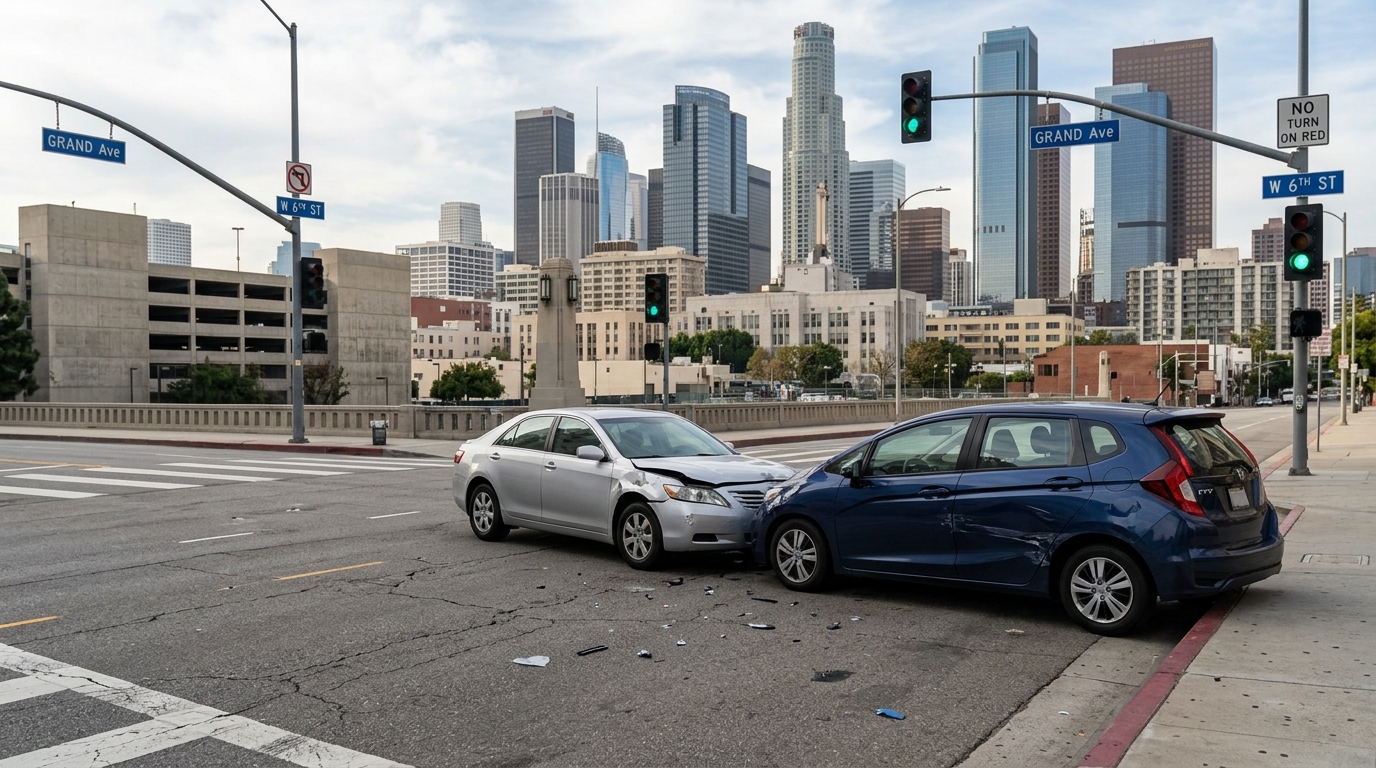
Photographs and video can preserve details that may change quickly once vehicles are moved, debris is cleared, or road conditions change. If you can do so safely, take wide and close-up images of the vehicles, their positions, visible damage, skid marks, traffic signals, lane markings, street signs, weather conditions, debris, and the surrounding roadway.
Include photographs from multiple angles and distances. In Los Angeles, intersections, freeway on-ramps, construction zones, and parking lots can have features that affect how an accident is evaluated. Images of obstructions, visibility issues, damaged sidewalks, or roadway defects may be relevant depending on the circumstances.
If the collision involved a rideshare vehicle, an autonomous vehicle, or a motorcycle, capture identifying information that is visible and safe to photograph. A rideshare accident or Waymo-related collision may involve additional parties and records, while a motorcycle crash can leave physical evidence that is especially vulnerable to being moved or lost.
Document Vehicle Damage Before Repairs
Photograph all damage to your vehicle, inside and out, before repairs or disposal. Do the same for other involved vehicles when practical and safe. Save repair estimates, invoices, towing receipts, storage charges, rental-car documents, and photographs provided by body shops or insurers.
Vehicle damage does not tell the entire story of an injury claim, but it may provide useful context about the collision. I recommend keeping documents in one location and asking before authorizing disposal of a vehicle or damaged parts when there is a possibility they could be important later.
Collect Witness and Driver Information
Exchange required information with the other driver and record the names, phone numbers, insurance details, license plate numbers, and vehicle descriptions for everyone involved. If witnesses saw the collision, ask for their names and contact information. Independent witnesses can be particularly helpful because their observations may not be tied to either driver.
Write down what witnesses said while the event is fresh in your memory, but do not pressure anyone to make a statement. Note whether nearby businesses, residences, transit vehicles, or traffic cameras may have captured video. Surveillance footage can be overwritten quickly, so identifying potential sources early can matter.
Request and Preserve the Police Report
When law enforcement responds, obtain the report number and the agency’s information. You may later be able to request a copy of the traffic collision report. The report can contain details such as the parties’ identifying information, witness names, officer observations, and diagrams of the scene.
A police report is one piece of the overall record, not the final word on every disputed issue. As a California accident lawyer, I review it alongside photographs, medical documentation, witness accounts, vehicle evidence, and other available information.
Keep Complete Medical Records and Bills
Save records from emergency departments, urgent care visits, primary-care providers, specialists, physical therapists, chiropractors, imaging facilities, pharmacies, and other treating providers. Keep appointment summaries, diagnostic-test results, prescriptions, referral documents, and records of recommended restrictions.
Also preserve medical bills, explanations of benefits, co-pay receipts, mileage related to treatment, and invoices for assistive devices or other accident-related expenses. Organized records can make it easier to understand the scope of treatment and to provide accurate information during a personal injury case review in California.
Track Lost Income and Work Limitations
If injuries caused you to miss work or limited the duties you could perform, retain pay stubs, tax records, time sheets, employer letters, disability paperwork, and written work restrictions from medical providers. Self-employed individuals may need invoices, client communications, calendar records, or business financial documents that show missed work or disrupted opportunities.
Do not rely on memory alone. A clear record of dates missed, hours reduced, and work tasks affected can be more useful than a general estimate made months later. Your employment circumstances and available documentation will be evaluated based on the facts of your situation.
Save All Insurance Communications
Keep every letter, email, text message, claim number, voicemail, and written settlement-related communication from insurers. Make notes after phone calls that include the date, the representative’s name, the claim number, and a brief summary of what was discussed.
You should be accurate when reporting basic facts, but consider seeking legal guidance before providing a recorded statement, signing broad authorizations, or accepting a settlement offer. A car accident attorney in Los Angeles can help you understand the purpose and possible implications of requested documents and communications without making assumptions about how a claim will be resolved.
Maintain a Personal Symptom Journal
A simple, contemporaneous journal can help preserve information that medical bills alone may not show. Record your symptoms, pain levels, sleep disruptions, mobility limitations, medication effects, medical appointments, and activities you could not complete as usual. Be honest and specific. If symptoms improve or change, note that as well.
This journal is not a substitute for medical care or professional records. Instead, it can help you remember the day-to-day impact of an injury and communicate more clearly with your treatment providers and legal counsel.
Why Organization Matters After a Los Angeles Collision
Evidence can disappear quickly. Vehicles are repaired, video footage is deleted, witnesses become difficult to locate, and memories fade. Creating a dedicated folder for digital files and a separate folder for paper records can reduce stress and make it easier to locate information when it is needed.
At the Law Offices of Ricardo A. Lopez, I help people throughout Los Angeles and California understand what records may be relevant after an accident. Whether the event involved a passenger vehicle, motorcycle, pedestrian, rideshare vehicle, or another roadway hazard, I take a careful, fact-specific approach to reviewing the available information. Bilingual support is available for clients who prefer to communicate in English or Spanish.
FAQ
Should I take photographs if the crash seems minor?
Yes, if it is safe to do so. Photographs can preserve vehicle positions, roadway conditions, and visible damage before those details change. A collision that appears minor at the scene may still require later review depending on injuries, insurance issues, and other facts.
What if I did not see a doctor on the day of the accident?
You should seek appropriate medical attention as soon as possible if you develop symptoms or have concerns about your health. Follow your provider’s recommendations and keep records of your visits. Delays do not automatically determine the outcome of a matter, but prompt and consistent documentation may be important.
Do I need to keep damaged personal property?
Photograph damaged property and save receipts, estimates, and related records. Before discarding significant damaged items or authorizing repairs to potentially important evidence, consider obtaining advice about whether preservation may be useful in your circumstances.
Can I speak with the other driver’s insurance company?
You may need to communicate basic information, but it is wise to understand what is being requested before giving a recorded statement, signing documents, or discussing injuries in detail. A car accident attorney in LA can review your situation and explain considerations that may apply.
How can I request a free case review?
If you were injured in a California collision, contact the Law Offices of Ricardo A. Lopez at (626) 487-9521 to request a free case review. I can discuss the available information, answer general questions about next steps, and help you understand your options based on the specific facts of your matter.
Moving Forward With Careful Documentation
After an accident, careful evidence preservation can support a clearer understanding of the crash and its effects. Focus first on your health and safety, then keep records that document the scene, your treatment, financial losses, and insurance communications. For a free, confidential case review, contact the Law Offices of Ricardo A. Lopez to discuss your California car accident and the information available in your case.